


Fresh cabbage juice and bottled cabbage juice are not simply the same drink in different containers. The moment cabbage is pressed, its flavour, smell and colour begin to change, and every step between press and consumer, whether chilling, pasteurising, bottling or storing, shifts the product further. For retailers and brands the real question is which route fits the channel: a very fresh product with a short life, or a processed bottle that travels and keeps. This article compares the two from a retail point of view.
It is general information about product behaviour and does not describe cabbage juice as a treatment for any condition.
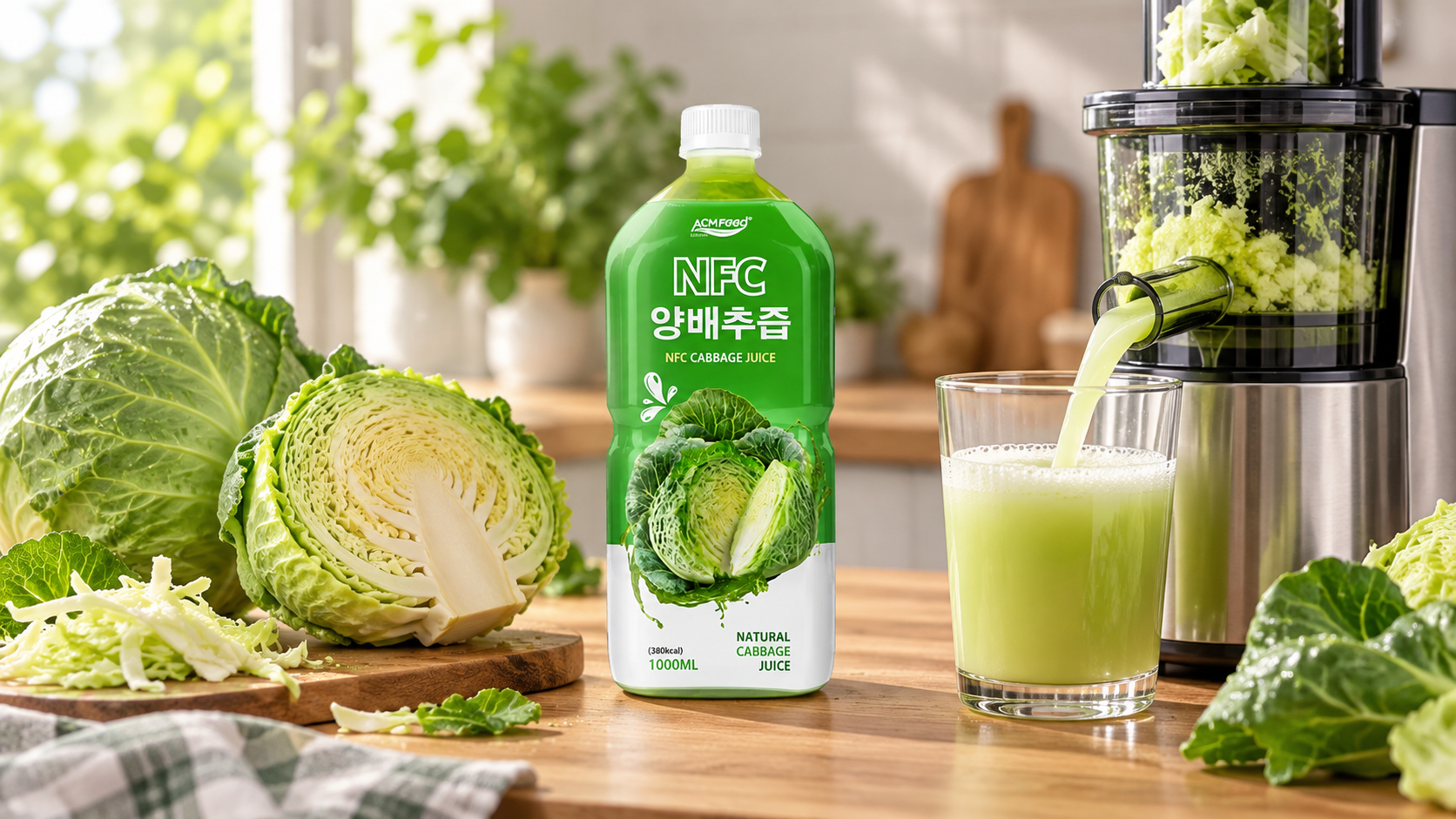
What changes after cabbage is pressed?
Pressing breaks the cabbage tissue and starts reactions that create the characteristic sulphur-like smell. Over time, the smell tends to strengthen, the colour dulls as pigments and chlorophyll react with oxygen, and the taste can become harsher. Warm temperatures speed up all of these changes.
That is why the best-tasting cabbage juice is usually the one that has been pressed most recently and kept cold. It is also why a product sold days later must be designed to slow these changes.
What does “fresh” mean on a label?
The word has no single legal meaning in every market, and rules for its use differ. In general, it should describe a product that has not been heat-treated or preserved in a way that changes its character, and it should be backed by an honest storage and date indication. A product that has been pasteurised should not be labelled as fresh in a way that misleads the buyer. Check the rules of the destination market before using the word.
Fresh versus bottled: how do they compare?
| Feature | Fresh, short-life | Bottled, processed |
|---|---|---|
| Taste | Most vivid, most vegetal | More consistent, often milder or more cooked |
| Smell | Stronger when fresh, intensifies over time | Often more stable |
| Colour | Brightest at first, fades | More stable if protected |
| Shelf life | Short, chilled only | Longer, depends on process |
| Distribution | Local, reliable cold chain | Wider reach |
| Safety design | Strict handling and storage | Defined process and verified storage |
| Retail fit | Specialist counters, cafes | Supermarkets, online, export |
Neither is better in the abstract. The right choice depends on where and how you sell.
How does processing affect taste and colour?
Heat treatment reduces microbial load and extends life, but it can strengthen the sulphur-like note and dull the colour. Non-thermal treatments such as high pressure processing can preserve a fresher character but still require chilled storage. Acidifying the juice with lemon or apple can improve taste and stability, but changes the product.
The practical consequence is that you should taste the bottled product after processing and at the end of shelf life, not only at the start.
Why is safety especially important for cabbage juice?
Cabbage is a low-acid vegetable. Low-acid, high-moisture products need a process designed for them and strict control of storage, and the safety of the product depends on following both. For fresh, short-life juice, cold storage and fast turnover are essential. For bottled juice, the process, pH and storage instruction must be defined and verified by testing.
Rules differ by country. Confirm the requirements for your destination market with the producer and, where needed, with a qualified adviser.
How do packaging choices differ?
| Format | Fresh, chilled | Bottled, processed |
|---|---|---|
| PET bottle | Common, shows colour | Common, needs barrier suited to the process |
| Glass bottle | Premium, heavier | Premium, suited to heat or HPP if designed for it |
| Can | Rare for chilled fresh | Suited to heat-treated products, blocks light |
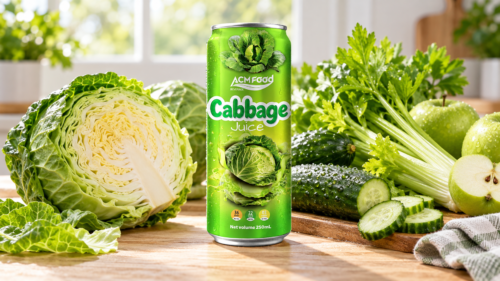
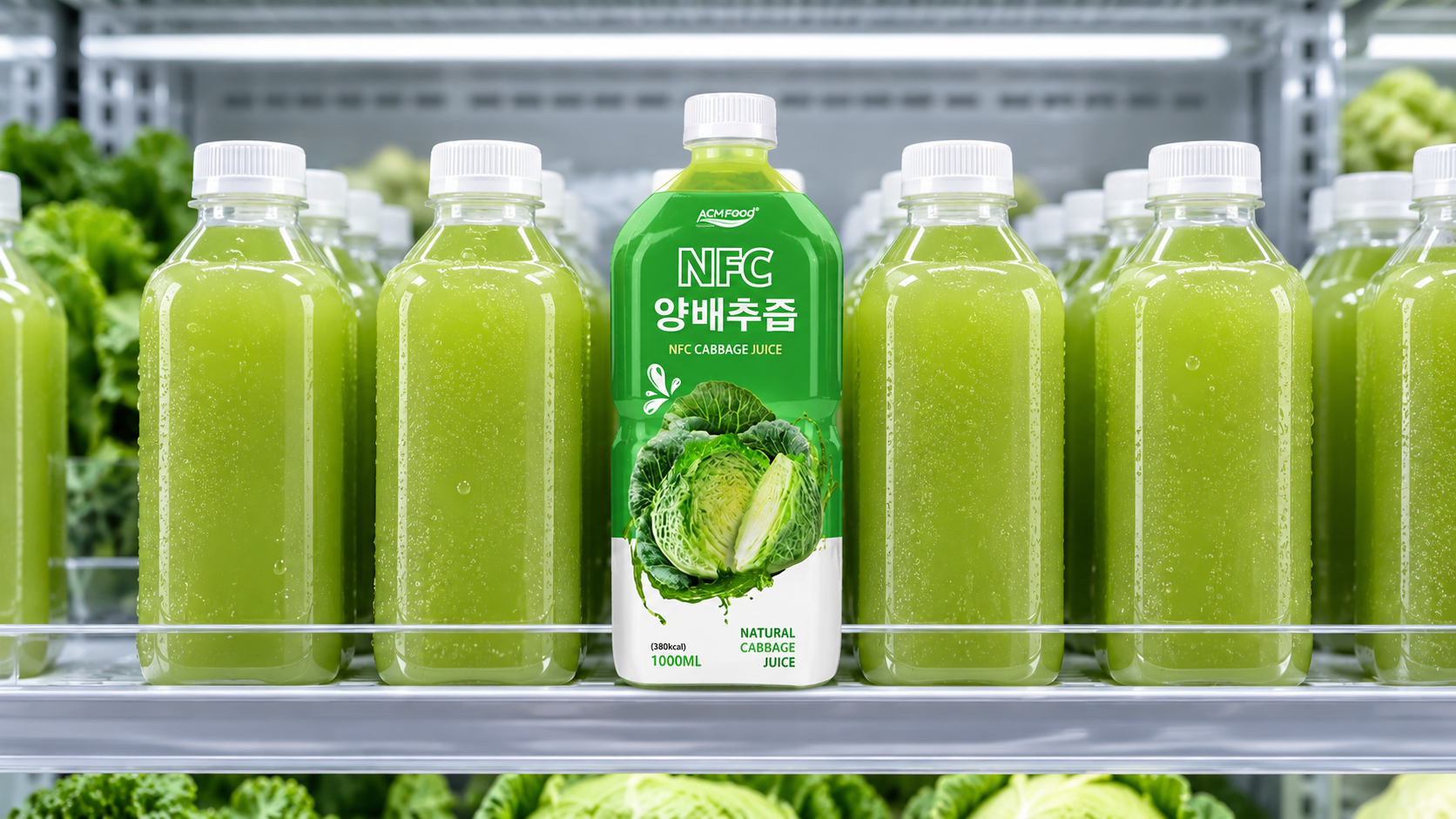
ACM Beverage supplies finished drinks in cans and bottles. For a bottled cabbage product, a can protects colour from light, while a bottle shows the pale green but needs storage that limits light exposure. The cabbage juice category shows how cabbage appears across the range.
What shelf life can you claim?
Shelf life must come from testing your own formulation in your own pack at the specified storage temperature. A study checks taste, smell, colour, microbiology and pack integrity over time. Do not copy a figure from another product. For a product with a pronounced smell like cabbage, include a sensory assessment of how the smell evolves, because consumers will reject a product that smells much stronger than they expect, even if it is still safe.
How should retailers handle each type?
- Fresh, short-life: plan frequent deliveries, strict rotation and a chilled shelf kept at the stated temperature.
- Bottled, chilled: follow the label storage instruction and monitor temperature.
- Bottled, shelf-stable: store as instructed and move opened products to refrigeration.
Train staff on the storage instructions, because the best formulation cannot compensate for a warm shelf.
How should a brand decide?
Consider where the product will be sold, how long it will spend in transit, whether a reliable cold chain exists and what taste consumers expect. If your channel is local and cold-chain reliable, a fresher product may be feasible. If your channel is wider or your distribution is less controlled, a processed can or bottle is more robust.
A useful test is to imagine the worst realistic day in your supply chain and ask whether the product would still be safe and acceptable. If you are unsure, choose the more robust format.
What should a product brief include?
- The route: fresh, chilled processed or shelf-stable.
- Pure cabbage or a blend, and with which partners.
- Pack type and size.
- Target shelf life and storage temperature.
- Target markets and labelling rules.
- Any claims you plan to make, checked by a qualified adviser.
Common mistakes
- Using the word fresh for a heat-treated product.
- Promising a shelf life that testing has not confirmed.
- Ignoring how the smell evolves over time.
- Selling a chilled product into a channel without cold storage.
- Printing health claims that are not supported.
Frequently asked questions
Does bottled cabbage juice taste different from fresh?
Usually yes. Processing changes the flavour, and the juice can taste milder or more cooked depending on the treatment.
Why does cabbage juice smell stronger over time?
Sulphur-containing compounds form and intensify after cutting, especially when the juice is warm.
Is a can better than a bottle?
A can blocks light, which helps colour, while a bottle shows the product. The choice depends on process, channel and positioning.
Summary
Fresh cabbage juice offers the most vivid taste but a short life and strict handling, while bottled juice offers consistency and reach at the cost of some freshness. Choose the route that fits your channel, confirm shelf life by testing and describe the product honestly. If you are developing a finished cabbage drink for your own label, ACM Beverage can discuss can and bottle formats and sampling once you share your market and storage plans.